
In the highly competitive world of modern aquaculture, the difference between a high-yield harvest and a significant financial loss often boils down to the critical decisions made during the first few hours of operation. Mastering the fundamentals of Mangrove Crab Stocking is the bedrock of a healthy, profitable crab farm, as it dictates the growth potential and survival rate of your entire inventory. By selecting the right specimens from the start, farmers can ensure their resources are spent on crabs with the highest capacity for weight gain and marketability.
At BigByte Aqua Ventures, we prioritize science-backed methods and rigorous quality control to ensure every part of your Mangrove Crab Stocking process is optimized for premium growth. We understand that success in the crab industry requires a balance of biological knowledge and disciplined operational procedures, starting from the moment the crabs arrive at your facility. The following guide outlines our professional standards for selecting high-quality stock and implementing essential disinfection protocols to protect your investment from wild-borne pathogens.
The Art of Selection: What to Look for in Stocking
Not every crab is suitable for stocking. To ensure rapid growth and high survival rates, you must be selective.
Seek Out “Water Crabs”
We recommend selecting thin (payat) crabs, often referred to as “water crabs.” These crabs are in a stage where they have recently molted and have plenty of room to grow within their shells, allowing for maximum weight gain in your facility.
Key Physical Indicators
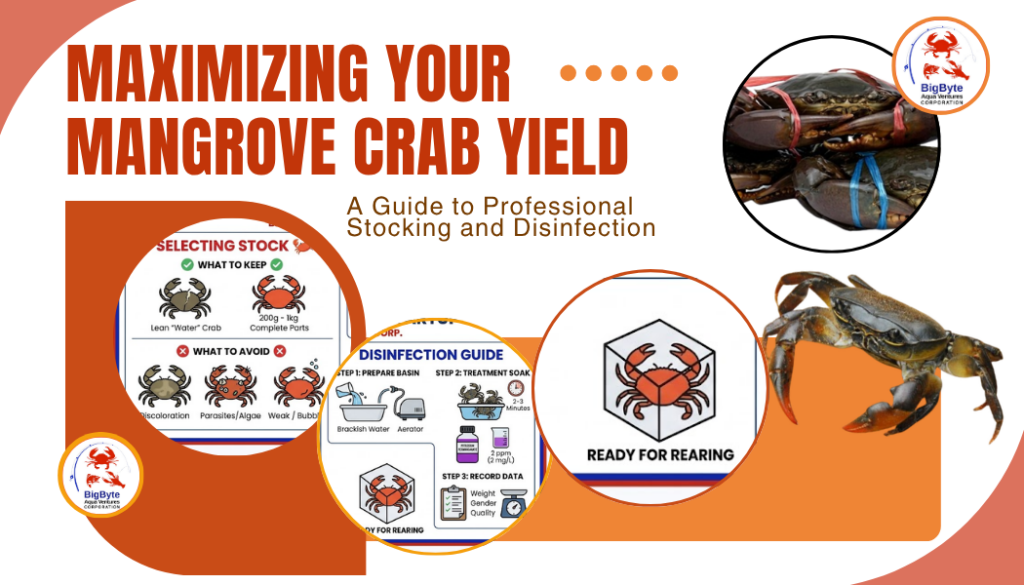
- Marketable Size: Ensure your stock weighs between 200 grams and 1 kilo.
- Physical Integrity: Only stock crabs with complete body parts. Check specifically for intact claws and legs, as missing limbs can lead to stress and lower market value.
- Shell Quality: Avoid crabs with shell discoloration, abrasions, or punctures. A clean shell is often the first sign of a healthy crab.
Health Red Flags
To prevent farm-wide contamination, strictly avoid:
- Crabs infected by parasites.
- Crabs with algal or barnacle attachments.
- “Bubbling” crabs: This is often a sign of respiratory distress or weakness.
The Disinfection Protocol: Protecting Your Investment
Crabs caught from the wild can carry pathogens and diseases that spread quickly in a closed system. Disinfecting your stock before placing them in their final boxes is a non-negotiable step.
The BigByte Disinfection Procedure
Follow these four steps to sanitize your stock safely:
- Prepare the Basin: Fill a clean basin with brackish water and install an aerator to ensure the crabs remain oxygenated during the process.
- The Submersion: Place the tied crabs carefully into the basin.
- Chemical Treatment: Apply Potassium Permanganate disinfectant at a concentration of 2 ppm (2 mg/L). Let the crabs soak for 2 – 3 minutes. This concentration is effective against surface pathogens without harming the crab.
- Data Recording: Before moving the crab to its individual box, record its initial body weight, gender, and quality. This data is vital for tracking growth rates and overall farm performance.
Why These Steps Matter
By following these basic operations, you reduce the risk of disease outbreaks and ensure that your feed is going toward “filling out” the water crabs, rather than just maintaining unhealthy stock.
Ready to scale your aquaculture venture?
Website: www.bigbyteaquaventures.com
Facebook: BigByte Aqua Ventures
Phone: +63 948 056 4792
Get in touch with us today:
Contact BigByte Aqua Ventures for more professional insights and advanced aquaculture solutions and let’s grow together.