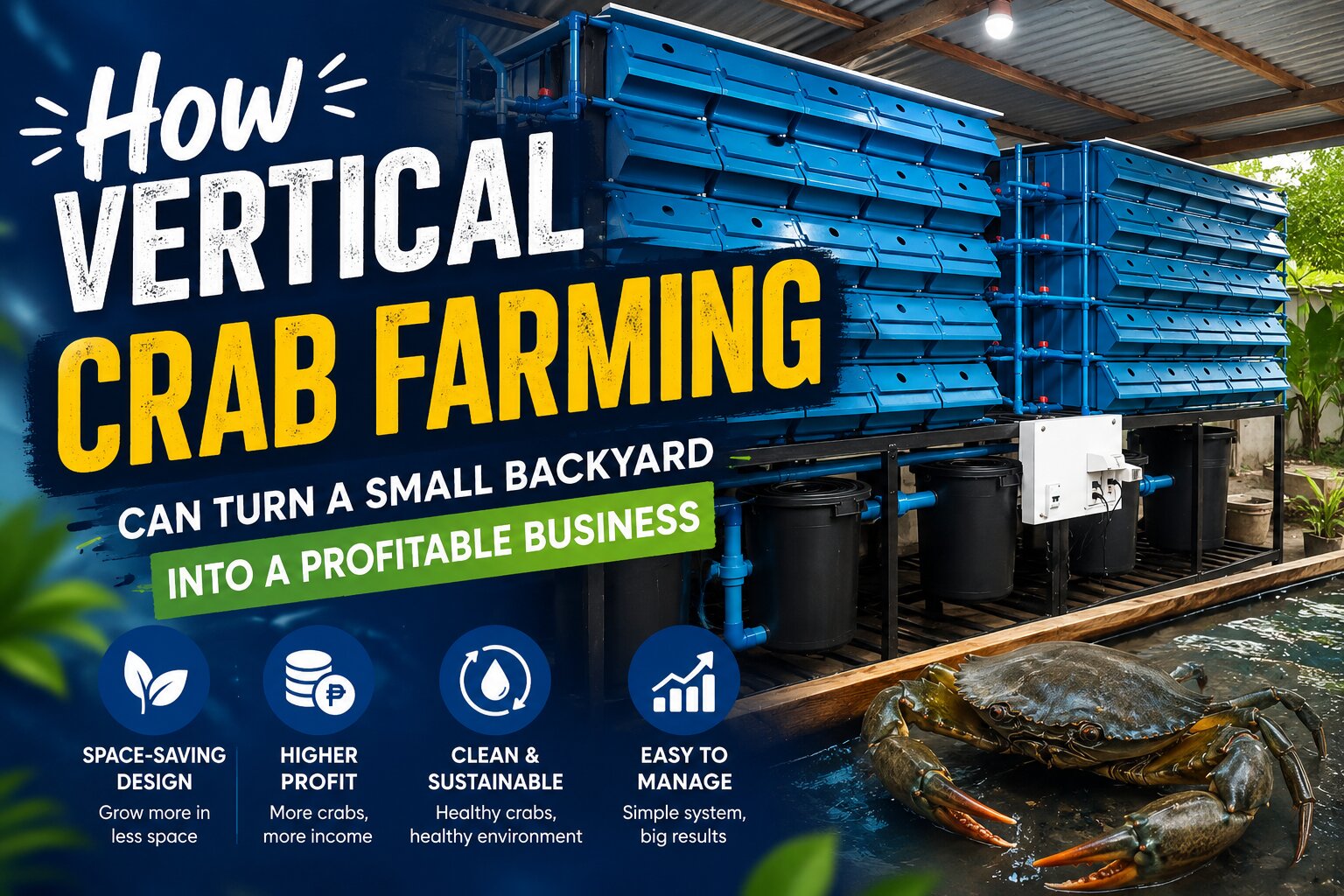

RAS Technology for Crab Farming: The Secret to Healthier, Faster-Growing Crabs
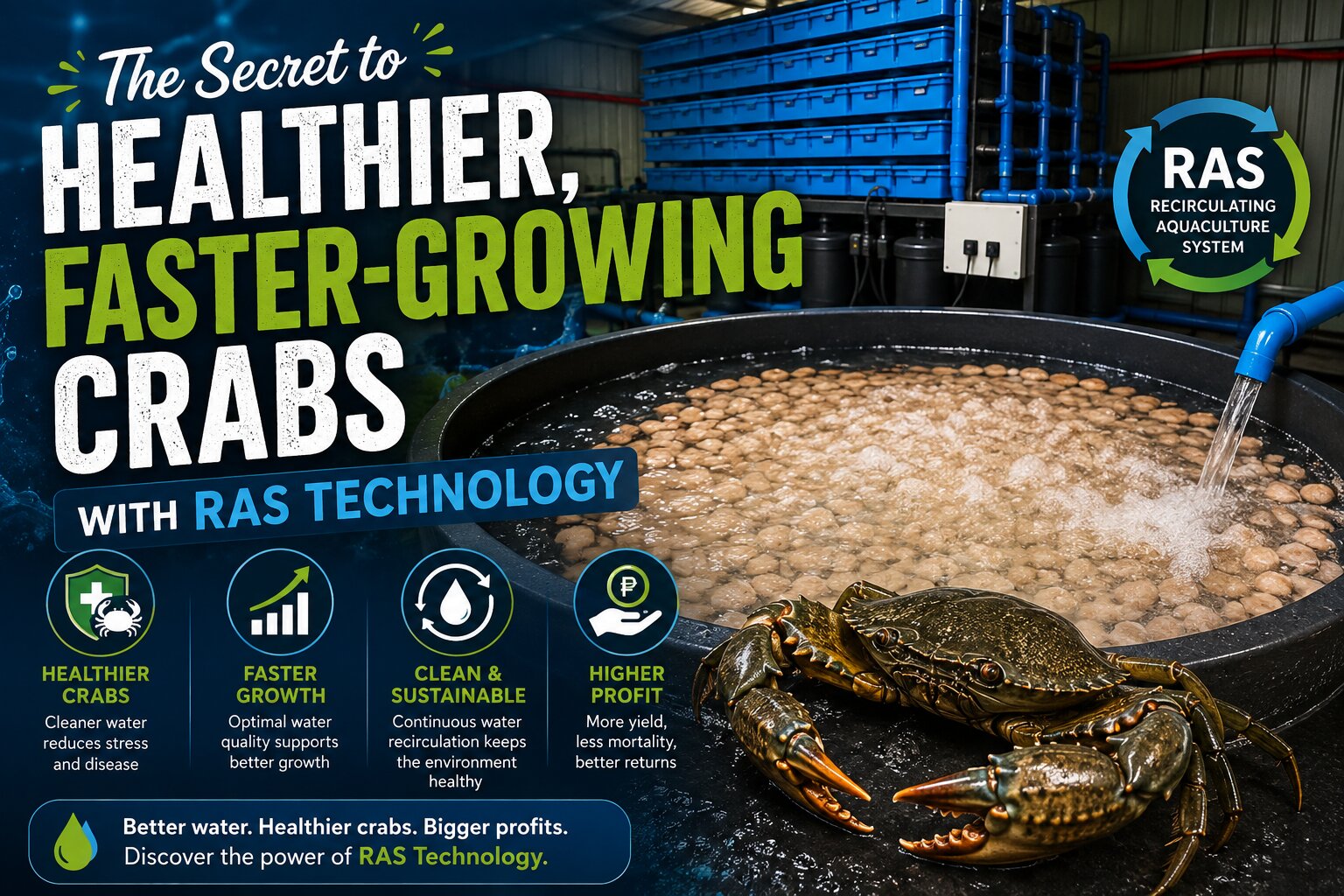
RAS Technology for Crab Farming is transforming modern aquaculture by helping farmers produce healthier, faster-growing mud crabs.As the aquaculture industry continues to evolve, crab farmers are adopting innovative technologies to improve production, reduce losses, and maintain consistent product quality. One of the most effective advancements in modern aquaculture is the RAS crab farming system, which helps create a stable and controlled environment for raising mud crabs.
A recirculating aquaculture system for crabs continuously filters and reuses water, allowing farmers to maintain optimal water conditions while using significantly less water than traditional farming methods. By improving water quality and reducing environmental stress, RAS technology supports healthier crabs, better growth rates, and more efficient farm operations.
In this article, we’ll explore how RAS technology works and why it is becoming an essential solution for modern crab farming in the Philippines.
What Is a RAS Crab Farming System?
A RAS crab farming system (Recirculating Aquaculture System) is a closed-loop farming method that treats, filters, and recirculates water instead of constantly replacing it. This technology uses a combination of mechanical, biological, and sometimes ultraviolet (UV) filtration to keep water clean and safe for aquatic animals.
Unlike traditional pond culture, RAS allows farmers to closely monitor and control environmental conditions, helping create a healthier habitat for mud crabs throughout their growth cycle.
How a Recirculating Aquaculture System Works
A recirculating aquaculture system for crabs continuously moves water through several treatment stages before returning it to the culture tanks.
Typical components include:
- Mechanical filters to remove solid waste
- Biological filters that convert harmful ammonia into less toxic compounds
- UV sterilizers to help reduce harmful microorganisms
- Aeration or oxygenation systems
- Water pumps and circulation equipment
- Monitoring devices for temperature, salinity, dissolved oxygen, and pH
This process keeps the water cleaner and more stable, reducing stress on the crabs.
Why Water Quality Is Critical in Crab Farming
Healthy mud crabs depend on clean, well-balanced water. Poor water conditions can slow growth, reduce feeding activity, and increase the risk of disease.
Effective water quality management for crabs focuses on maintaining:
- Stable temperature
- Proper salinity
- Adequate dissolved oxygen
- Balanced pH levels
- Low ammonia and nitrite concentrations
- Clean water with minimal organic waste
By maintaining these conditions, farmers can create an environment that supports stronger and healthier crab development.
Benefits of Healthy Crab Farming Technology
Modern healthy crab farming technology offers several advantages over traditional farming methods.
Improved Growth Performance
Stable water conditions reduce stress, allowing crabs to feed more consistently and convert nutrients more efficiently.
Higher Survival Rates
Cleaner water and improved environmental control help reduce mortality caused by poor water quality and disease outbreaks.
Better Feed Efficiency
Healthy crabs typically consume feed more effectively, reducing waste and improving overall farm productivity.
Consistent Production
Controlled farming conditions allow farmers to manage production more efficiently throughout the year, regardless of seasonal weather changes.
Reduced Environmental Impact
Because water is filtered and reused, RAS systems require less water than conventional farming methods while minimizing wastewater discharge.
Why More Farmers Are Investing in RAS
As seafood demand continues to increase, farmers are looking for technologies that improve productivity without sacrificing sustainability.
A RAS crab farming system helps farmers:
- Produce premium-quality mud crabs
- Reduce water consumption
- Improve farm biosecurity
- Monitor environmental conditions more accurately
- Increase operational efficiency
- Better manage intensive farming systems
These advantages make RAS an attractive investment for commercial crab farms and expanding aquaculture businesses.
Is RAS Suitable for Small and Large Farms?
One of the strengths of a recirculating aquaculture system for crabs is its flexibility. The technology can be adapted to different farm sizes depending on production goals and available resources.
RAS can be implemented in:
- Small backyard aquaculture projects
- Vertical crab farming systems
- Commercial grow-out farms
- Soft-shell crab production facilities
- Research and hatchery operations
The system can also be expanded over time as production increases.
Advanced Aquaculture Solutions in the Philippines
The Philippine aquaculture industry is steadily adopting more sustainable and efficient farming technologies. Among the leading advanced aquaculture solutions Philippines farmers are exploring are recirculating systems, automated monitoring equipment, water filtration technologies, and vertical farming methods.
These innovations help farmers improve productivity while supporting responsible resource management and long-term business growth.
As more farms embrace modern technologies, the industry becomes better equipped to meet the increasing demand for high-quality seafood in local and international markets.
Best Practices for Maximizing RAS Performance
To get the most from a RAS crab farming system, farmers should:
- Monitor water quality daily.
- Maintain filtration equipment regularly.
- Feed crabs according to recommended schedules.
- Avoid overcrowding culture tanks.
- Inspect pumps, aerators, and backup systems frequently.
- Keep accurate records of water parameters and crab performance.
- Train staff on proper system operation and maintenance.
Consistent management helps ensure the system operates efficiently and supports healthy crab production.
Conclusion
RAS Technology for Crab Farming is one of the most effective solutions for producing healthier and faster-growing mud crabs. By improving water quality, reducing disease risks, and increasing production efficiency, farmers can achieve better yields while promoting sustainable aquaculture practices.
Whether you are starting a new crab farm or upgrading an existing operation, investing in RAS Technology for Crab Farming can help improve productivity and long-term profitability. With proper management and modern equipment, RAS provides a reliable path toward successful crab farming in the Philippines.
Ready to Learn More?
If you’re interested in vertical crab farming in Davao or want to learn more about modern crab farming systems, BigByte Aqua Ventures is here to help. Whether you’re planning to start a crab farm, upgrade your current setup, or join a crab farming seminar, our team is ready to assist you.
Check out the latest seminar schedule on BigByte Aqua Ventures or get in touch with our team directly.
🌐 Website: www.bigbyteaquaventures.com
📘 Facebook: BigByte Aqua Ventures
📞 Phone: +63 948 056 4792
Frequently Asked Questions
Vertical crab farming is an innovative method that maximizes space efficiency by stacking crab habitats, allowing for sustainable and high-yield farming.
We specialize in farming high-quality vertical crab species that thrive in controlled environments, ensuring optimal growth and sustainability.
Yes! We provide vertical crab farm starter kits and essential equipment to help you set up your own farm successfully.
You can browse our online store and place an order directly through our website. If you have specific requirements, feel free to contact us for custom orders.