
Crab farming has become one of the fastest-growing aquaculture industries in the Philippines, particularly in coastal regions like Davao. As consumer demand for premium-quality mud crabs continues to increase, local farmers are looking for smarter and more efficient ways to improve production without the need to acquire more land. One solution that has gained significant attention is vertical crab farming in Davao.
Unlike traditional pond-based farming, vertical crab farming uses stacked containers or multi-level culture systems that maximize available space while improving farm management and productivity. This modern crab farming system enables farmers to raise more crabs in a smaller area while reducing common challenges such as cannibalism, poor water quality, and inconsistent growth.
With land prices increasing and sustainable farming becoming more important, many aquaculture entrepreneurs are recognizing the benefits of this innovative approach. In this article, we’ll explore why more Davao farmers are embracing vertical crab farming and how this technology is helping shape the future of aquaculture in the Philippines.
What Is Vertical Crab Farming?
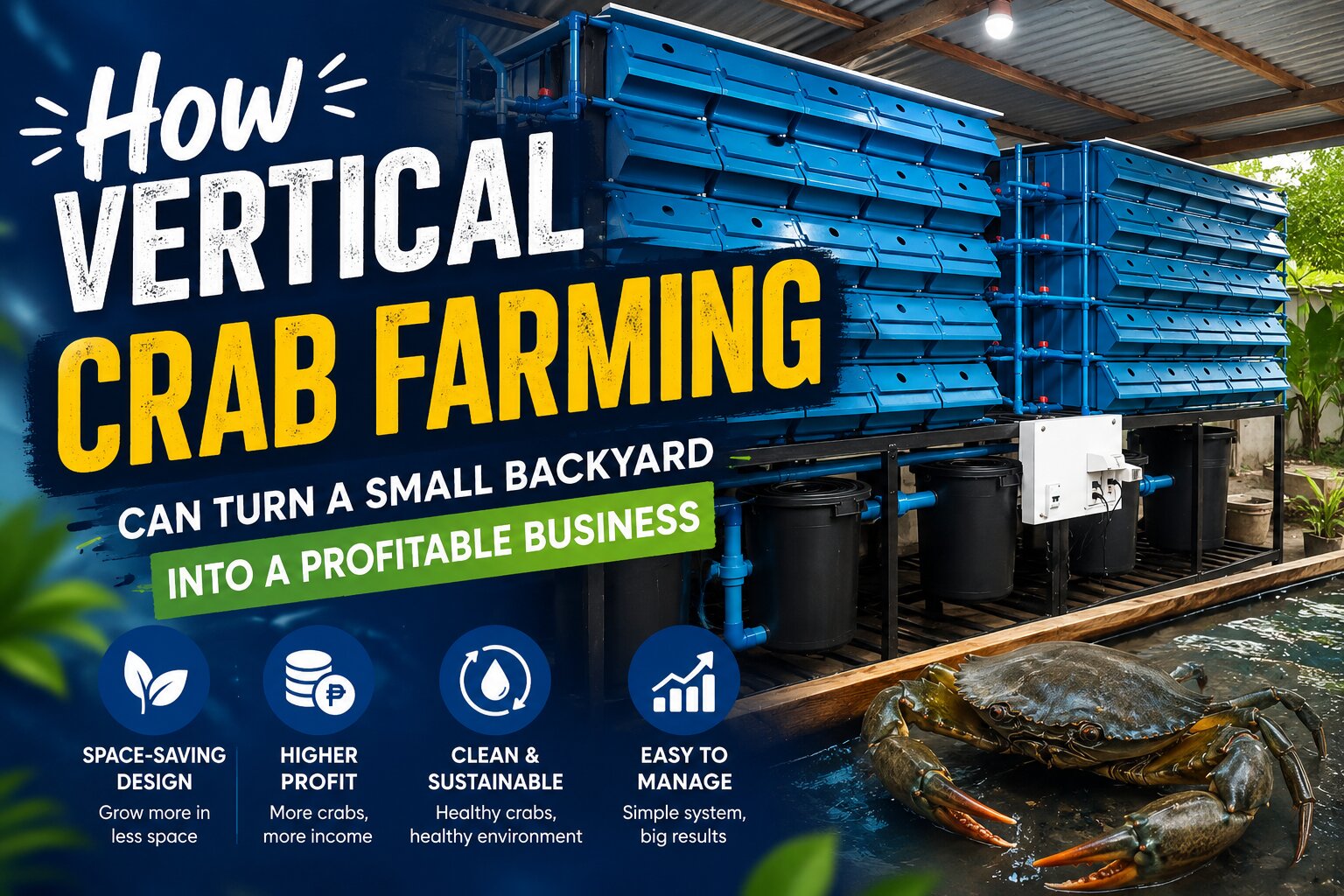
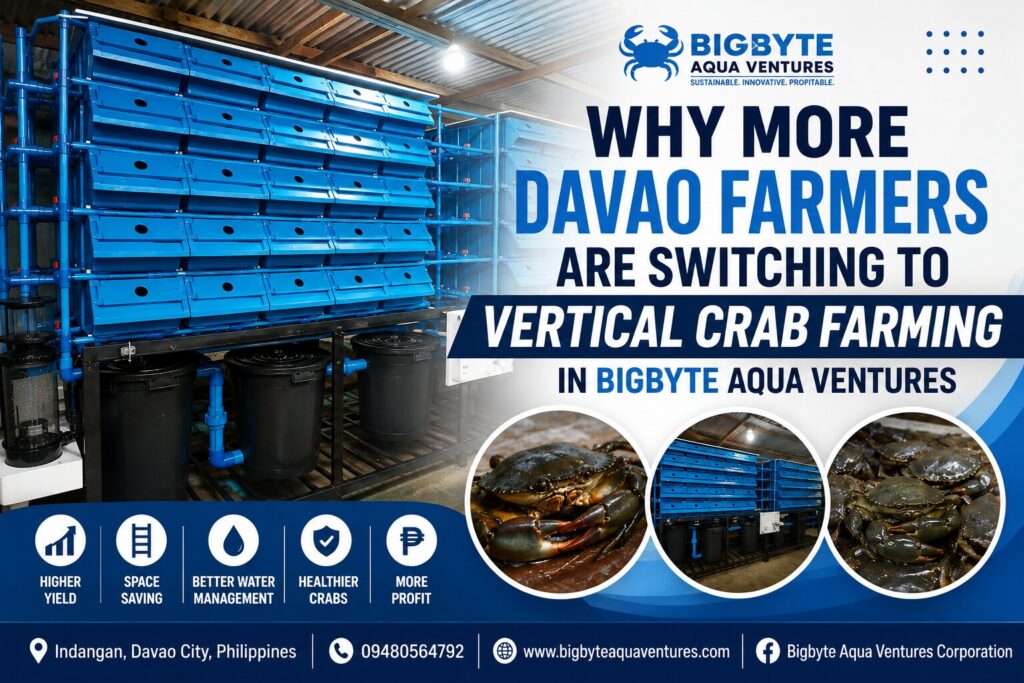
Vertical crab farming is an aquaculture method that raises crabs in stacked or tiered culture units instead of relying entirely on traditional ponds. Rather than allowing crabs to roam together, each crab is usually housed in its own compartment. This setup allows farmers to monitor feeding, molting, growth, and health more efficiently.
The system is designed to maximize both land and water resources while creating a controlled environment that supports healthier crab production. By reducing direct contact between crabs, farmers can also minimize injuries and losses caused by aggressive behavior.
Because of its efficient design, vertical farming has become an attractive option for commercial farms, hatcheries, soft-shell crab producers, and even small-scale entrepreneurs who want to increase production while maintaining quality.
Why Davao Farmers Are Making the Switch
Maximizes Limited Farm Space
One of the biggest advantages of vertical crab farming is its ability to maximize limited farm space. Instead of expanding into larger ponds or purchasing additional land, farmers can increase production by building upward through stacked growing systems.
This approach allows more crabs to be cultured within the same area while keeping the farm organized and easier to manage. For farmers operating in areas where land is expensive or limited, vertical farming provides a practical and cost-effective solution.
Some of the major benefits include:
- Higher stocking capacity
- Better land utilization
- Increased production per square meter
- Easier farm expansion
Reduces Crab Cannibalism
Mud crabs naturally become aggressive, especially during molting when their shells are soft and vulnerable. In conventional pond systems, stronger crabs often attack weaker or newly molted crabs, leading to lower survival rates and financial losses.
Vertical farming significantly reduces this problem by placing crabs in individual compartments. Since each crab has its own space, physical contact is minimized, creating a safer environment throughout the growing cycle.
As a result, farmers enjoy several advantages:
- Higher survival rates
- More uniform harvest sizes
- Lower production losses
- Better overall profitability
Reducing cannibalism not only increases harvest volume but also improves product quality and consistency.
Easier Feeding and Daily Monitoring
Managing a large crab farm becomes much easier when every crab can be monitored individually.
Instead of searching through muddy ponds, farmers can quickly inspect each compartment to observe feeding habits, molting progress, and overall health. Daily monitoring also allows farmers to identify problems early before they affect the entire system.
Farmers can easily monitor:
- Feeding behavior
- Molting activity
- Growth performance
- Signs of disease or stress
Routine monitoring helps maintain healthier stocks and supports better decision-making throughout the production cycle.
Improved Water Management
Water quality plays a major role in successful aquaculture. Poor water conditions can reduce growth, increase stress, and make crabs more susceptible to disease.
Many vertical farming systems incorporate water treatment technologies that help maintain a clean and stable growing environment. These systems commonly include:
- Mechanical filtration
- Biological filtration
- UV sterilization
- Water circulation pumps
- Oxygen monitoring
Maintaining good water quality improves crab health, encourages faster growth, and reduces production risks throughout the farming process.
Higher Production Efficiency
Many farmers are adopting vertical crab farming in Davao because it improves overall production efficiency while reducing unnecessary waste.
With an organized farming system, daily operations become more streamlined. Farmers can provide more accurate feeding schedules, reduce feed waste, simplify labor, and better plan harvests based on growth performance.
Benefits include:
- More accurate feeding
- Reduced feed waste
- Lower labor costs
- Better harvest planning
- Consistent production schedules
These improvements help farmers achieve higher productivity while lowering operating expenses, leading to better long-term returns on investment.
Is Vertical Crab Farming the Best Method in the Philippines?
There is no single farming method that is perfect for every aquaculture operation. The ideal system depends on factors such as available land, production goals, budget, and management experience.
However, many aquaculture professionals consider vertical farming one of the most effective methods for intensive mud crab production because it offers better environmental control, improved monitoring, and higher production efficiency.
Vertical farming is especially suitable for:
- Commercial crab farms
- Soft-shell crab production
- Hatchery grow-out systems
- Research facilities
- Farms with limited land area
Even with modern equipment, success still depends on proper farm management, balanced nutrition, excellent water quality, and regular maintenance.
Challenges to Consider
Although vertical farming offers numerous advantages, farmers should also understand the challenges involved before investing.
Compared to traditional ponds, vertical farming requires a higher initial investment because specialized equipment is needed to maintain the system effectively.
Startup requirements may include:
- Culture tanks
- Vertical racks
- Water pumps
- Filtration systems
- Aeration equipment
- Backup power supply
Proper training is equally important. Farmers should understand water quality management, feeding techniques, disease prevention, equipment maintenance, and routine monitoring to maximize the benefits of the system.
Despite these startup costs, many producers find that improved survival rates, reduced losses, and higher production efficiency help recover their investment over time.
Why Vertical Farming Fits Davao
Davao has become one of the country’s growing aquaculture centers due to its strategic coastal location, expanding seafood industry, and increasing demand for premium mud crabs.
As production costs continue to rise and available farmland becomes more limited, technologies that improve efficiency are becoming increasingly valuable.
A vertical aquaculture system enables farmers to produce more crabs while making better use of available land, water, and labor. This makes vertical farming an attractive long-term investment for entrepreneurs who want to increase profitability while supporting sustainable aquaculture practices.
With continued innovation and proper farm management, vertical farming can help strengthen Davao’s position as a leading producer of quality mud crabs in the Philippines.
Final Thoughts
The future of aquaculture is moving toward smarter, more efficient production systems. From maximizing limited farm space to reducing crab cannibalism and improving water management, vertical crab farming in Davao offers numerous benefits for farmers seeking sustainable growth.
Although the system requires careful planning and an initial investment, its long-term advantages often outweigh the costs. Higher survival rates, improved monitoring, increased production efficiency, and better resource management all contribute to a more profitable farming operation.
For individuals planning to start a crab farm or upgrade an existing one, adopting a modern vertical crab farming system can provide a significant competitive advantage. As demand for premium mud crabs continues to grow, farmers who invest in efficient and sustainable farming technologies will be better positioned for long-term success.
Ready to Learn More?
If you’re interested in vertical crab farming in Davao or want to learn more about modern crab farming systems, BigByte Aqua Ventures is here to help. Whether you’re planning to start a crab farm, upgrade your current setup, or join a crab farming seminar, our team is ready to assist you.
Check out the latest seminar schedule on BigByte Aqua Ventures or get in touch with our team directly.
🌐 Website: www.bigbyteaquaventures.com
📘 Facebook: BigByte Aqua Ventures
📞 Phone: +63 948 056 4792