
Mangrove crab farming is a rewarding venture, but success hinges on one critical factor: water management. Understanding the specific needs of your crabs and how to maintain their environment is the difference between a thriving harvest and a failed investment.
At BigByte Aqua Ventures, we specialize in providing the technical expertise and systems needed to turn aquaculture into a sustainable and high-yield business. From understanding the specific salinity requirements of your livestock to designing a robust Recirculating Aquaculture System (RAS), our mission is to empower farmers with data-driven solutions.
In this guide, we’ll break down the essentials of water salinity, how to create the perfect artificial environment, and how to calculate the water requirements for a Recirculating Aquaculture System (RAS).
The Ideal Water for Mangrove Crabs
Mangrove crabs naturally thrive in Brackish Water. This is a unique combination of freshwater and seawater typically found in estuaries, mangrove swamps, lakes, fish ponds, and coastal areas.
What is Salinity?
Salinity measures the concentration of dissolved salts in water, usually expressed in parts per thousand (ppt).
- Brackish Water: Ranges from 5–30 ppt.
- Seawater/Saline Water: Ranges from 30–50 ppt.
- Freshwater: Ranges from 0–0.5 ppt.
How to Create Brackish Water:
If you don’t have direct access to a natural brackish source, you can mix it yourself using these combinations:
- Seawater + River water
- Seawater + Deepwell
- Seawater + Faucet water
- Faucet water + Salt
- River water + Salt
- Deepwell + Salt
Mangrove crabs require brackish water ($5-30$ ppt), which can be naturally sourced or manually mixed using saltwater and freshwater sources.
Creating Artificial Brackish Water
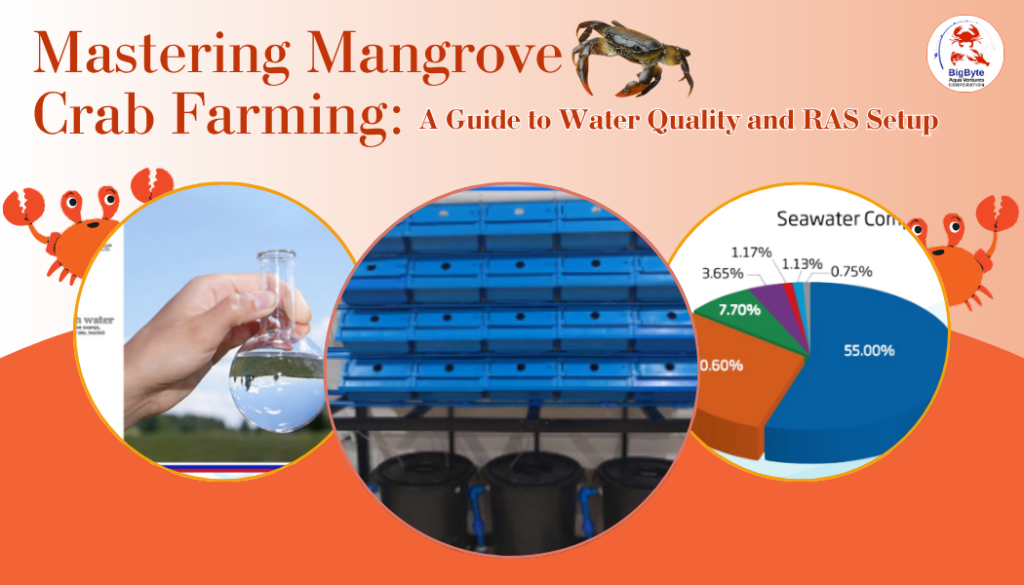
When mixing your own water, it isn’t just about salt; it’s about chemistry. To mimic natural seawater (which is roughly 55% Chloride and 30.6% Sodium), you need to manage several parameters:
- Salinity & Temperature: Both must be monitored for stability.
- pH & Hardness: Crucial for shell development.
- Dissolved Oxygen: Necessary for crab respiration.
- Essential Additives:
- Salt
- Magnesium Chloride (powder/flakes)
- Calcium Chloride (powder)
- Probiotics/Beneficial Bacteria
- Salt
Creating artificial water requires balancing chemical composition, including magnesium and calcium, to ensure a healthy environment for your crabs.
The Recirculating Aquaculture System (RAS)
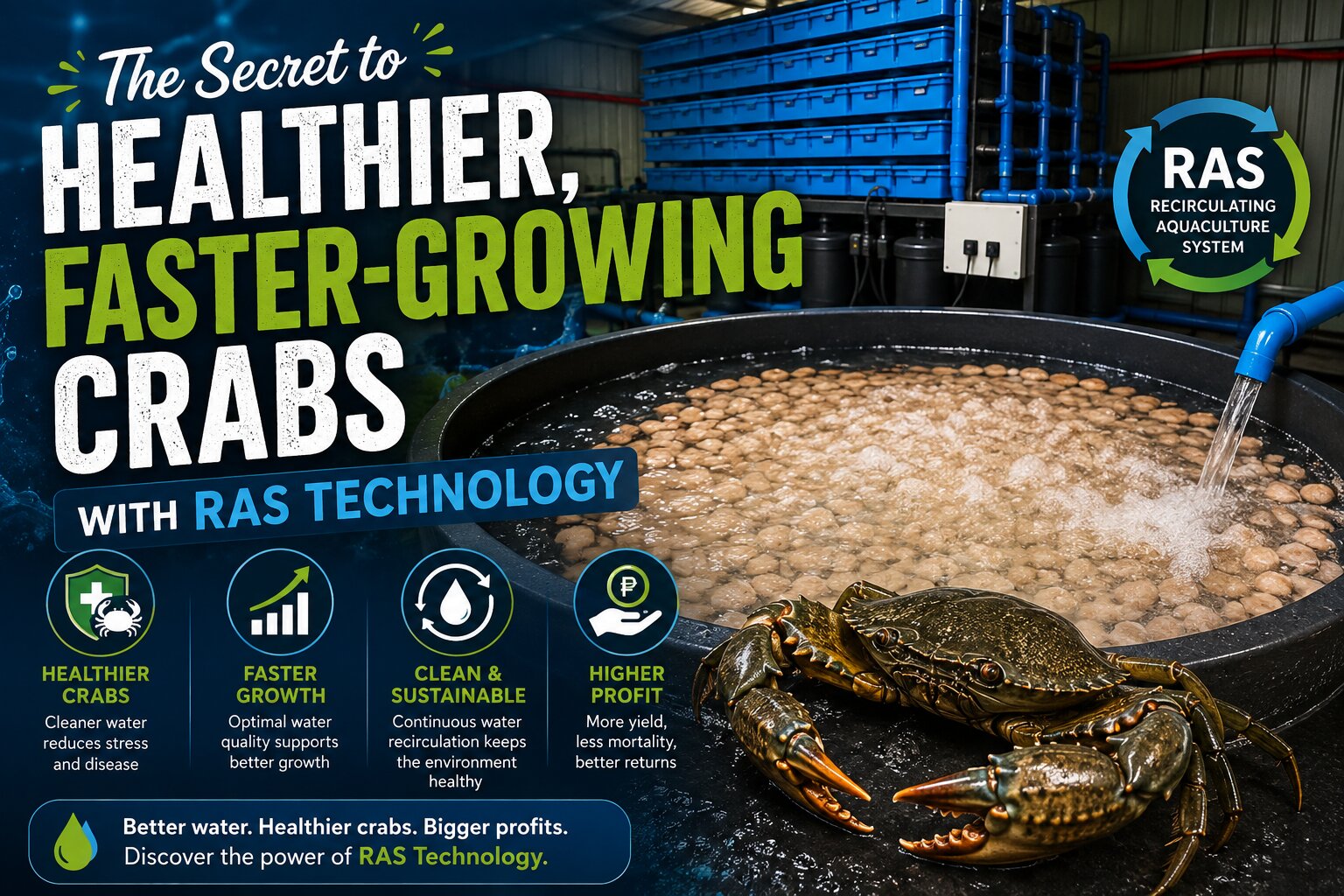
An RAS is a highly efficient way to farm crabs by recycling water through various filtration stages. Here is the standard flow of a crab RAS:
- Fish/Crab Tank: Where the livestock is housed.
- Mechanical & Chemical Filter: Removes solid waste and chemical impurities.
- Biological Filter: Uses beneficial bacteria to treat the water.
- Water Pump (Sump Tank): Collects cleaned water and pumps it back to the tanks.
- Aeration: Adds oxygen back into the cycle before it reaches the crabs.
A Recirculating Aquaculture System (RAS) maintains water quality through a continuous cycle of mechanical, chemical, and biological filtration.
Calculating Your Water Volume
Planning your tank size and pump capacity starts with precise water volume computation. You must account for both the crab boxes and the additional water-holding components.
Example Setup: 100 Crab Boxes
If you have 100 boxes holding 7 liters each, your base volume is 700 Liters. You must then calculate the RAS components:
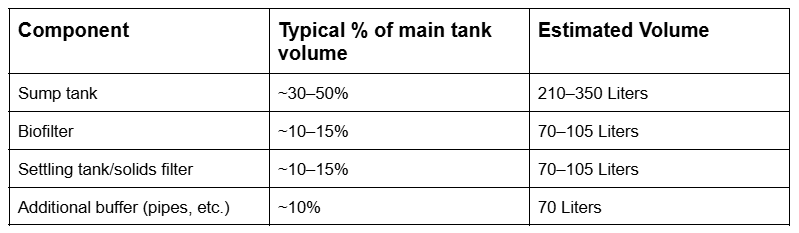
Total Water Volume Needed: Using the upper limit values for safety, a 100-box setup requires a total volume of 1,330 Liters. This figure is crucial for planning your tank size and pump capacity.
Always calculate your total water volume by adding the capacity of your crab boxes to the estimated volume of your filtration and sump components.
Ready to start your aquaculture journey?
Successful mangrove crab farming isn’t just about the crabs, it’s about mastering the water they live in. By understanding salinity, balancing artificial additives, and correctly sizing your RAS setup, you are building a foundation for a high-yield, sustainable business. Every liter of water you manage correctly is an investment in your future harvest. You have the tools and the math to succeed; now it’s time to put them into practice!
Website: www.bigbyteaquaventures.com
Facebook: BigByte Aqua Ventures
Phone: +63 948 056 4792
Get in touch with us today:
Contact BigByte Aqua Ventures today to get expert advice on your RAS setup and take the first step toward a thriving crab farm!