
Mangrove crab farming has long been part of the aquaculture industry in the Philippines. Traditionally, farmers used ponds and open-water systems to grow crabs. While these methods can still produce results, many crab farmers today are shifting to Vertical Crab Farming because of its efficiency, sustainability, and better production management.
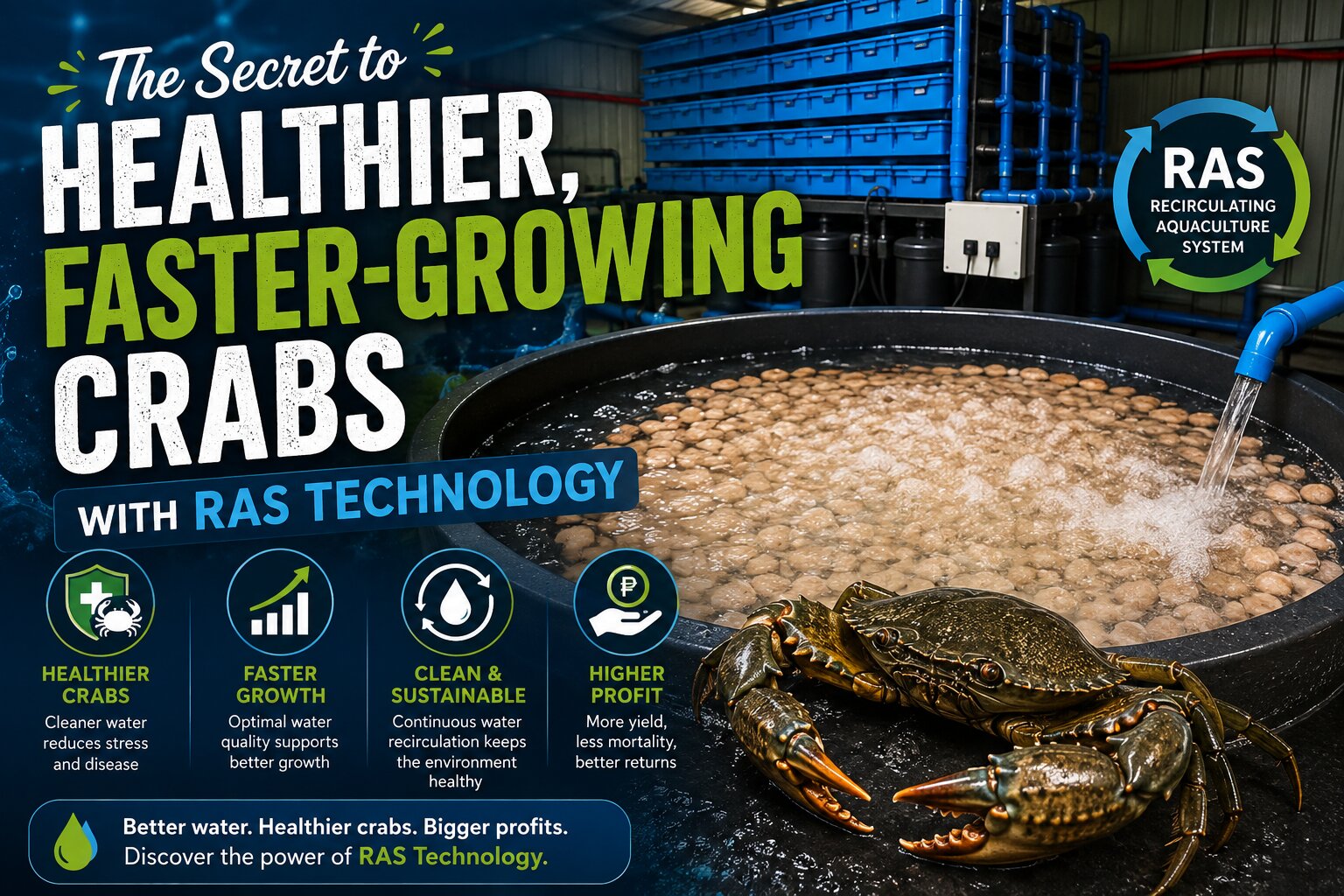
At BigByte Aqua Ventures, we promote modern vertical crab farming systems powered by Recirculating Aquaculture System (RAS) technology to help farmers overcome common problems found in traditional pond farming.
In this article, we will compare vertical crab farming and traditional pond farming to understand why more aquaculture businesses are adopting modern vertical systems.
What is Traditional Pond Farming?
Traditional pond farming involves raising mud crabs in large ponds, fish pens, or open-water environments. Crabs share the same space and depend heavily on natural water conditions.
Although this method has been practiced for many years, it often comes with challenges such as:
- Water quality fluctuations
- Crab cannibalism
- Difficult monitoring
- Higher risk of disease spread
- Space limitations
What is Vertical Crab Farming?
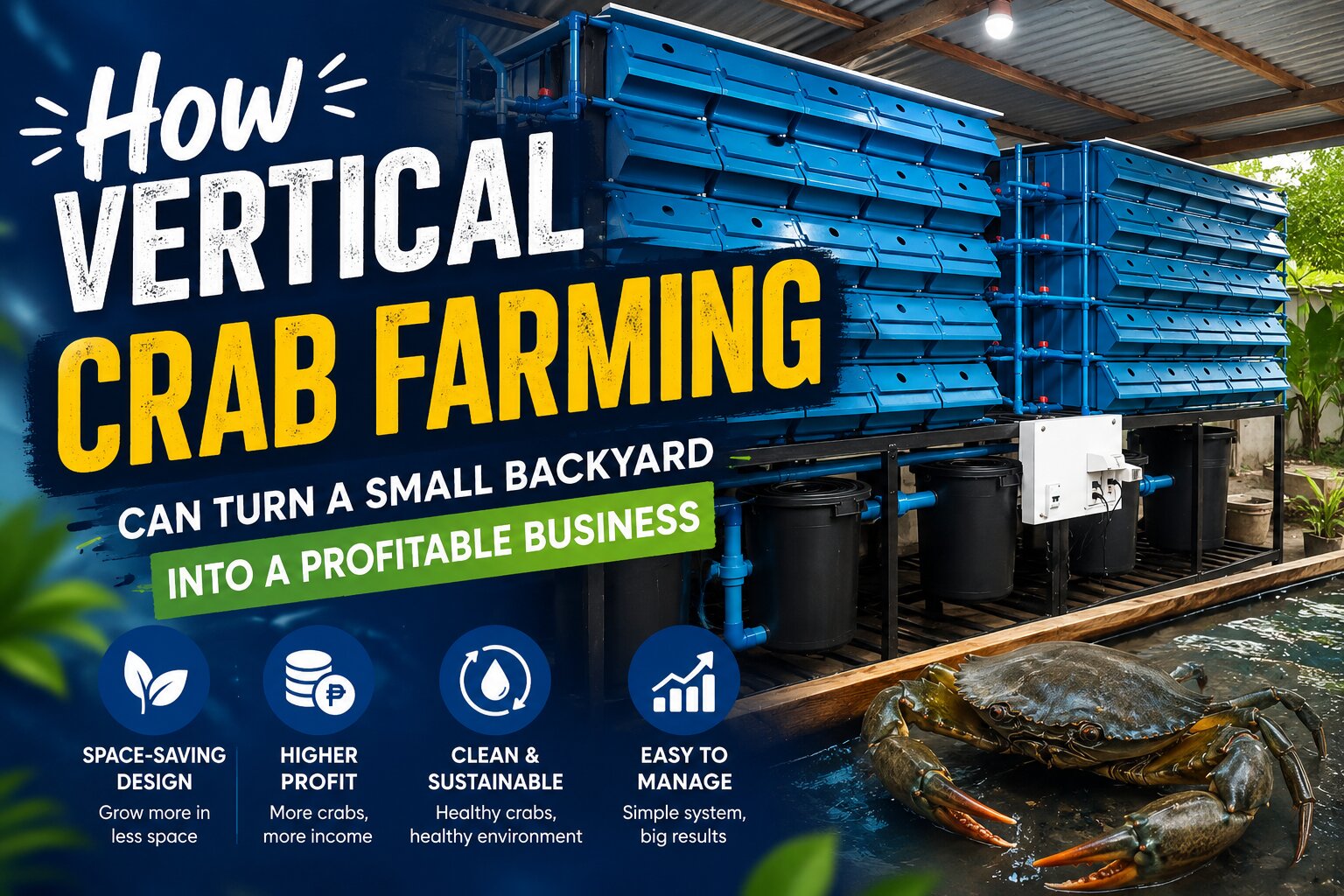
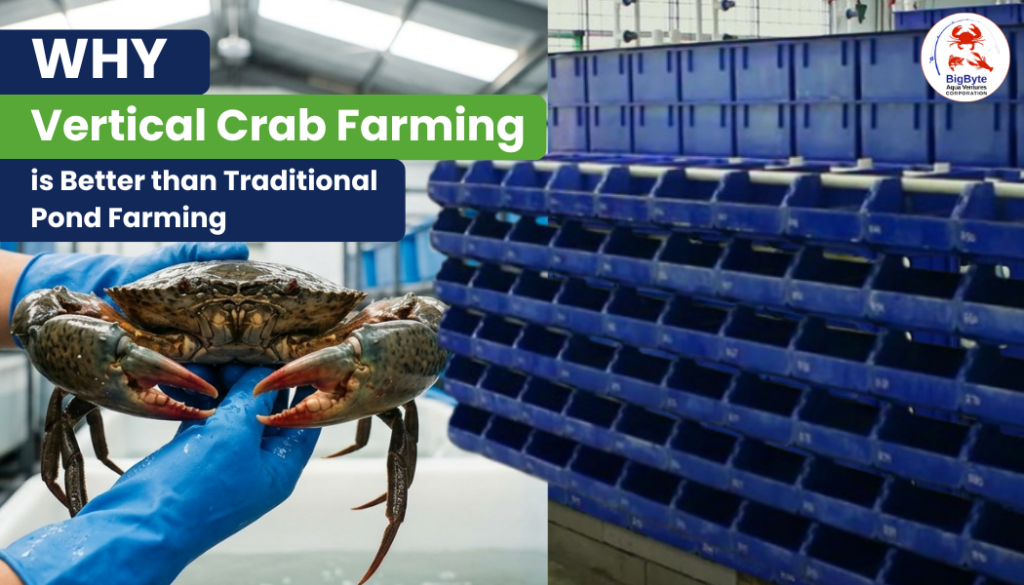
Vertical crab farming uses stacked crab condo systems where crabs are housed individually. Water is continuously filtered and recirculated through a controlled RAS setup.
This modern approach allows farmers to:
- Raise more crabs in limited spaces
- Improve survival rates
- Monitor crab health more effectively
- Maintain stable water quality
Advantages of Vertical Crab Farming
1. Better Space Utilization
One of the biggest advantages of vertical farming is the ability to maximize production in small areas.
Traditional pond farming requires large land areas, while vertical systems allow farmers to raise more crabs vertically using stacked compartments.
This is especially beneficial for:
- Urban aquaculture projects
- Small-scale farms
- Indoor farming facilities
- Commercial expansion
2. Reduced Crab Fighting and Cannibalism
Mangrove crabs are territorial and aggressive by nature.
In traditional ponds, crabs often attack each other during molting periods, causing injuries and death.
Vertical crab farming solves this issue by separating crabs individually, helping improve survival rates significantly.
3. Improved Water Quality Management
Traditional ponds are highly dependent on weather conditions and external water quality.
In contrast, vertical farming systems use RAS technology that continuously filters and recirculates water.
This helps maintain:
- Stable oxygen levels
- Cleaner water
- Lower ammonia buildup
- Better environmental control
4. Easier Monitoring and Maintenance
In pond systems, monitoring individual crabs can be difficult.
With vertical systems, farmers can easily check:
- Crab condition
- Feeding activity
- Molting stages
- Growth performance
This allows quicker response to potential problems.
5. Sustainable Water Usage
RAS technology reduces water consumption by recycling and filtering water instead of constantly replacing it.
This makes vertical crab farming more environmentally sustainable compared to traditional methods.
Challenges of Traditional Pond Farming
Many traditional crab farmers experience issues such as:
- Seasonal water quality changes
- High mortality rates
- Predator exposure
- Difficult harvesting
- Uneven crab growth
- Large space requirements
These challenges can affect productivity and profitability.
Why Farmers Choose BigByte Aqua Ventures
BigByte Aqua Ventures provides modern aquaculture solutions designed to improve efficiency and sustainability.
Our services include:
- Vertical crab farming installation
- RAS system setup
- Crab condo solutions
- Technical consultation
- Farm expansion support
- Aquaculture equipment assistance
We help clients transition from traditional systems to modern farming methods that support long-term growth.
The Future of Crab Farming in the Philippines
As aquaculture technology continues to improve, more farmers are recognizing the benefits of controlled farming systems.
Vertical crab farming offers a smarter approach by reducing operational risks while improving productivity and sustainability.
With growing demand for high-quality live mud crabs, modern farming methods are expected to play an important role in the future of Philippine aquaculture.
At Bigbyte Aqua Ventures
Traditional pond farming may still work for some operations, but vertical crab farming offers significant advantages in terms of space efficiency, water management, sustainability, and crab survival.
At BigByte Aqua Ventures, we continue to support crab farmers by providing innovative farming systems and technical solutions that help improve aquaculture operations.
If you want to modernize your crab farming business, vertical crab farming may be the next step toward a more efficient and sustainable future.
Website: www.bigbyteaquaventures.com
Facebook: BigByte Aqua Ventures
Phone: +63 948 056 4792
Get in touch with us today:
Contact BigByte Aqua Ventures today us we ready to help you build a smarter and more sustainable crab farming operation.