
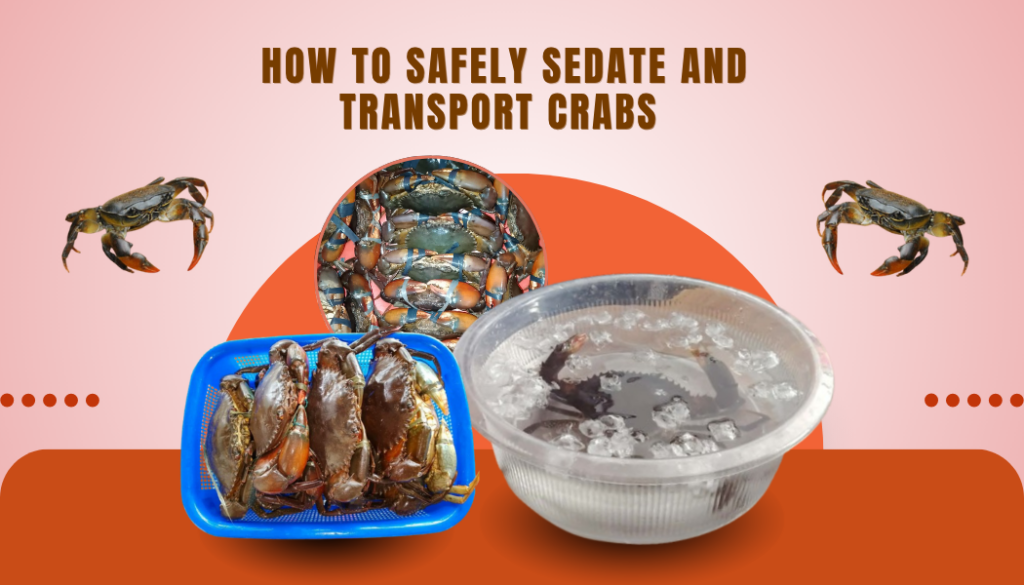
Transporting crabs requires proper handling techniques to ensure safety, quality, and efficiency. Safe crab transport is essential to prevent stress, injury, and loss, especially when dealing with active and aggressive crabs. Without the right process, both handlers and the crabs are at risk during preparation and delivery.
To achieve safe crab transport, industry practices such as proper sedation and packaging must be followed. BigByte Aqua Ventures Corporation applies these proven methods to maintain crab quality and ensure smooth handling from harvest to delivery.
Why Sedating Crabs is Important
Sedation is one of the safest ways to handle crabs. It helps:
- Reduce movement and aggression
- Minimize stress for the crabs
- Lower the risk of injury during handling
- Make tying and packing easier
By calming the crabs, you create a safer and more controlled process.
How to Sedate Crabs Properly
Follow these steps to safely sedate crabs:
- Prepare a bucket filled with ice and water
- Place the crabs inside the bucket
- Allow them to stay for a few minutes until they become less active
- Once the crabs are less active or asleep, remove them from the bucket
- Safely tie the crabs to prepare them for transport
This method slows down their metabolism, making them easier to handle without causing harm.
Best Materials for Transporting Crabs
Choosing the right container is essential for maintaining quality:
- Cardboard boxes (“karton”) – Affordable and breathable
- Styrofoam boxes – Ideal for maintaining cool temperature
These materials help protect the crabs and support proper conditions during transport.
Proper Arrangement of Crabs
After sedation and tying, proper arrangement is important:
- Place the crabs carefully inside the container
- Use wet cloths to maintain moisture
- Add cardboard layers if stacking is needed
- Avoid overcrowding to prevent damage
This ensures the crabs remain in good condition throughout the journey.
Tips for Safe Crab Transport
- Keep the temperature cool
- Avoid direct sunlight
- Maintain proper moisture
- Handle with care at all times
Safe crab transport starts with proper sedation and continues with correct handling and packaging. By following these simple yet effective steps, handlers can reduce risks, maintain crab quality, and improve overall transport efficiency.
Website: www.bigbyteaquaventures.com
Facebook: BigByte Aqua Ventures
Phone: +63 948 056 4792
Get in touch with us today:
Contact BigByte Aqua Ventures for more professional insights and advanced aquaculture solutions and let’s grow together.